Cabeço de Vide Apple and Walnut Boleima
Apple half-moons, chopped walnuts and cinnamon between two layers of olive-oil bread dough: that’s the boleima of Cabeço de Vide, in the municipality of Fronteira. It goes into the oven already cut into squares, each topped with a slice of apple. It’s a great option for an autumn snack or to add to the table on St Martin’s Day.
The recipe was collected from Maria Jesuína dos Santos Mourato in Cabeço de Vide, in an interview conducted in 2012 and included in the Alentejo Gastronomic Guide. In this version, the apple and walnuts are enclosed in the dough, while the sugar and cinnamon are distributed through the filling and over the surface.
Estimated yield: 16 squares, in a baking tray about 30 × 20 cm.
Estimated timings: 35 minutes preparation, 15 minutes resting, 45–55 minutes baking and 20 minutes cooling. About 2 hours in total, starting with already-risen bread dough.
Ingredients
- 500 g raw wheat bread dough, already risen
- 250 ml extra virgin olive oil
- 100 g plain flour, plus a little extra for dusting the baking tray
- 500 g apples, weighed whole
- 75 g walnut kernels, chopped into small pieces
- 120 g soft brown sugar
- 2 level teaspoons ground cinnamon
- Butter for greasing the baking tray
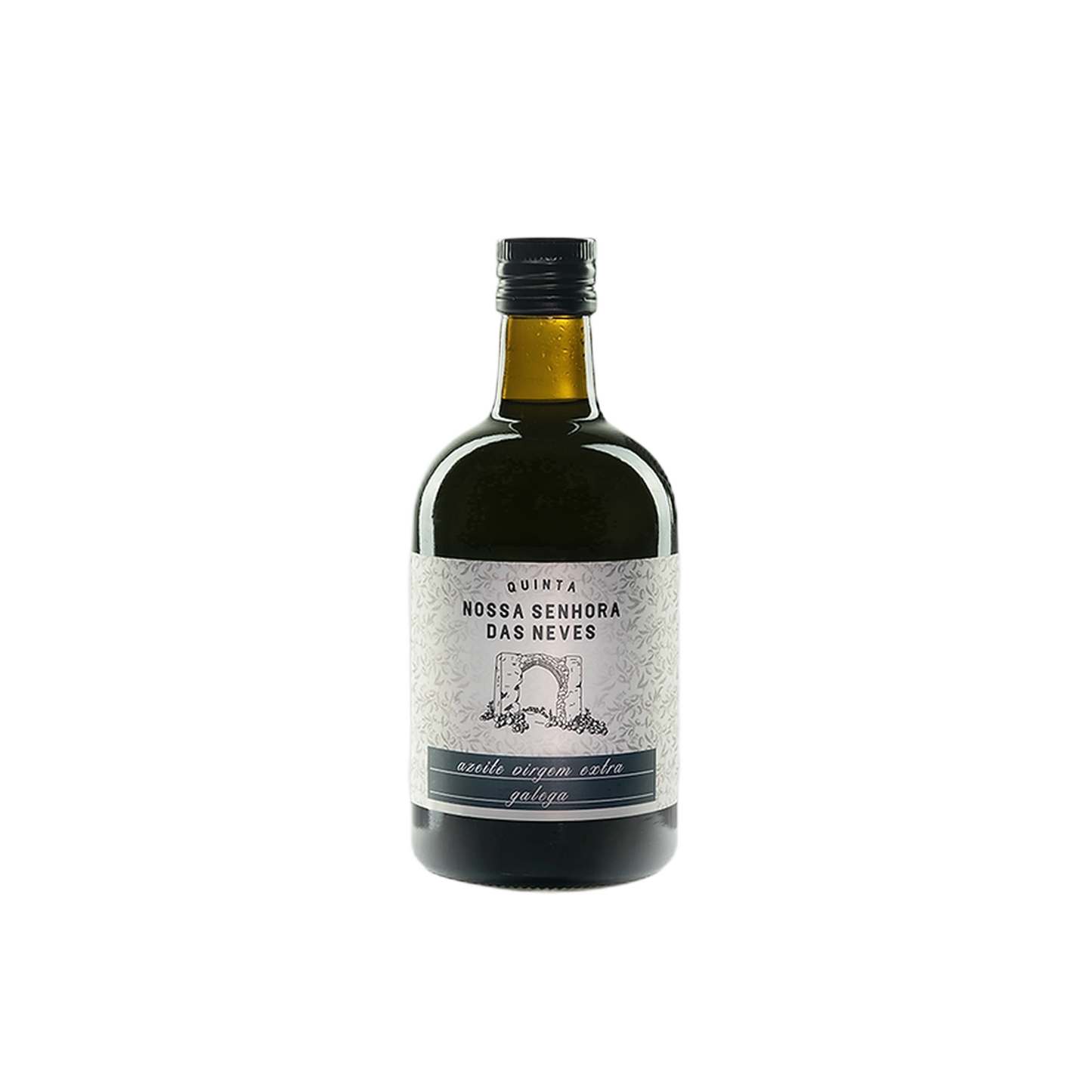
Use Galega Single-Varietal Extra Virgin Olive Oil: its mild, fruity profile complements the apple and cinnamon without overpowering the filling.
Preparation
-
Prepare the baking tray and filling.
Preheat the oven to 180 °C, with top and bottom heat. Grease a baking tray about 30 × 20 cm with butter and dust it with flour. Peel the apples, remove the cores and cut them into thin half-moons, about 3 mm thick. Set aside 16 small half-moons for the topping. Chop the walnuts. Set aside 40 g of the sugar and mix the remaining 80 g with the cinnamon. -
Knead with the olive oil.
Place the bread dough in a bowl or a wide mixing bowl. Add the 100 g of flour and gradually work in the olive oil, kneading for about 8–10 minutes until the dough is smooth, soft and oily. Knead it in the bowl so you can work in all the olive oil. Cover and leave to rest for about 15 minutes to make the dough easier to roll out. -
Assemble the two layers.
Divide the dough into two equal portions. Spread one half over the bottom of the baking tin, pressing it into the corners with your hands. Sprinkle a third of the sugar and cinnamon mixture over the top. Spread the apple for the filling and the walnuts in an even layer, then sprinkle with the reserved 40 g of sugar. Roll out the other half of the dough between two sheets of baking paper, remove the top sheet and turn the dough out over the filling. Remove the paper and gently join the edges to the bottom layer. Sprinkle with another third of the sugar and cinnamon mixture. -
Cut before baking.
Using a knife, cut the uncooked boleima into 16 squares or rectangles, cutting through the layers to the bottom. Place half a slice of apple on each portion and finish with the remaining sugar and cinnamon mixture. -
Bake and let it set.
Bake on a rack slightly below the middle for about 45–55 minutes. The top should be golden, the apple tender and both layers of dough cooked through, with no damp, sticky strip inside. Check a portion in the centre next to one of the cuts; if the dough is still raw, bake it longer. If the top browns too quickly, cover it loosely with aluminium foil. Leave to cool for about 20 minutes, run a knife along the cuts and lift out the portions with a wide spatula.
Tips for a well-filled boleima
Slice the apple thinly and spread it out without piling it up, so the top layer lies evenly. Set aside the topping slices before assembling the filling, so you don’t have to open up the boleima to retrieve them.
The dough contains a generous amount of olive oil. Incorporate it gradually and knead in the bowl; adding flour without measuring alters the balance between the dough and the filling.
Wine pairing
Serve with the chilled Figueirinha 2022 Sparkling Wine. Its hazelnut and apricot notes complement the walnuts and baked fruit, while its fine bubbles provide a lively contrast to the olive oil-enriched dough.
Storage and serving
Serve the boleima warm or at room temperature. If there are leftovers, let them cool and store the portions in a sealed container in the fridge. The moisture from the apple softens the crust; warm the portions briefly in the oven before serving to restore some crispness to the surface.
Frequently asked questions
What kind of bread dough should I use?
Raw, risen wheat bread dough, such as the kind you can order from a bakery. The 500 g is the weight of the ready-to-use dough, not baked bread or flour on its own.
How do I place the top layer without tearing it?
Roll it out between two sheets of baking parchment to fit the tray. Remove one sheet, turn the dough over onto the filling and slowly peel away the other. If a small crack appears, press the edges together with your fingers before sprinkling with sugar and cinnamon.
More Alentejo sweets
For another baked sweet with nuts, try the Vidigueira Convent Almond Cake.
Source and adaptations
Recipe “Boleima de Pão, Canela, Noz e Maçã” (Bread, Cinnamon, Walnut and Apple Boleima), from Carta Gastronómica do Alentejo (2013), p. 182, recipe card 0088, Cabeço de Vide, Fronteira. Interview with Maria Jesuína dos Santos Mourato by Adelaide Martins, Leader-Sor, in 2012. Adapted by Herdade do Estacal for the “À Mesa com o Alentejo” blog.
The quantities of bread dough, olive oil, flour, apple and walnuts have been halved. The source leaves the sugar and cinnamon to taste and specifies only a medium oven. The quantities of these two ingredients, the baking tray, the previously risen dough, the resting time, 180 °C, the timings and the yield are estimated home-cooking guidelines. The two-layer assembly, raw filling and cutting before baking have been retained.