Share
Cericá de Vila Viçosa: Baked Cinnamon Egg Sweet♀♀♀♀♀♀
Vila Viçosa cericá is served in the earthenware dish itself: a cream of milk and egg yolks receives whipped egg whites, is spooned into the dish and baked sprinkled with cinnamon. The surface becomes slightly golden; underneath, the texture remains soft.
A collection from Vila Viçosa
In the Alentejo Gastronomic Guide, this cericá was recorded in an interview with cook Maria Rocha, in Vila Viçosa. The collection identifies it as a convent sweet and describes a particular gesture: spooning the mixture into the dish, without trying to achieve a perfectly smooth surface, and opening it with a knife halfway through baking. The source indicates that it is prepared throughout the year; it does not present it as a sweet exclusively associated with Christmas.
Serves: 8 portions
Total time: about 1 hour and 10 minutes, plus cooling
Ingredients for 8 people
- 9 large eggs, with yolks and whites separated
- 1 l semi-skimmed milk
- 350 g sugar
- 90 g plain flour (about 9 level tablespoons)
- 15 g butter for greasing the dish
- 5 g ground cinnamon for sprinkling
Preparation
- Prepare the oven and dish. Preheat the oven to 190 °C, without fan assistance. Grease a suitable ovenproof earthenware dish, about 28 cm in diameter with a high rim, with the 15 g of butter. Separate the yolks from the whites, reserving the whites in a clean, dry bowl.
- Make the custard. While the saucepan is still off the heat, mix the 9 yolks with the 350 g of sugar and the 90 g of flour until no lumps remain. Add the milk gradually, whisking with a balloon whisk. Place over medium-low heat and stir continuously, especially across the bottom, for about 12 to 18 minutes, until it thickens well and the whisk leaves marks. Remove from the heat. Transfer the custard to a wide bowl and leave to cool slightly for 10 to 15 minutes, stirring occasionally: it should remain pliable but no longer be very hot.
- Fold in the egg whites. Beat the 9 egg whites until firm peaks form, without letting them become dry. First mix one third into the custard to lighten it. Gently fold in the remainder with a spatula, in two additions, without beating or trying to achieve a completely uniform mixture.
- Arrange and bake. Spoon the mixture into the earthenware dish, creating irregular ridges. Sprinkle with the 5 g of cinnamon. Bake on the middle shelf for about 25 to 35 minutes. Halfway through baking, carefully make a shallow cut in the centre with a knife, as in the collection. It is ready when the top is slightly golden and firm around the edges, while the centre still trembles gently, without any liquid custard. If it browns quickly, protect it with a sheet of aluminium foil without letting it touch the sweet.
- Let it set. Remove from the oven and wait at least 20 minutes before serving by the spoonful. The cericá sinks slightly as it cools; this is natural.
Tips for a soft custard
Use moderate heat and stir the custard constantly so it does not stick. Let it cool slightly before adding the egg whites, to retain some volume. A deeper earthenware dish may require a few extra minutes in the oven; the surface should be firm without drying out the inside.
To serve with it
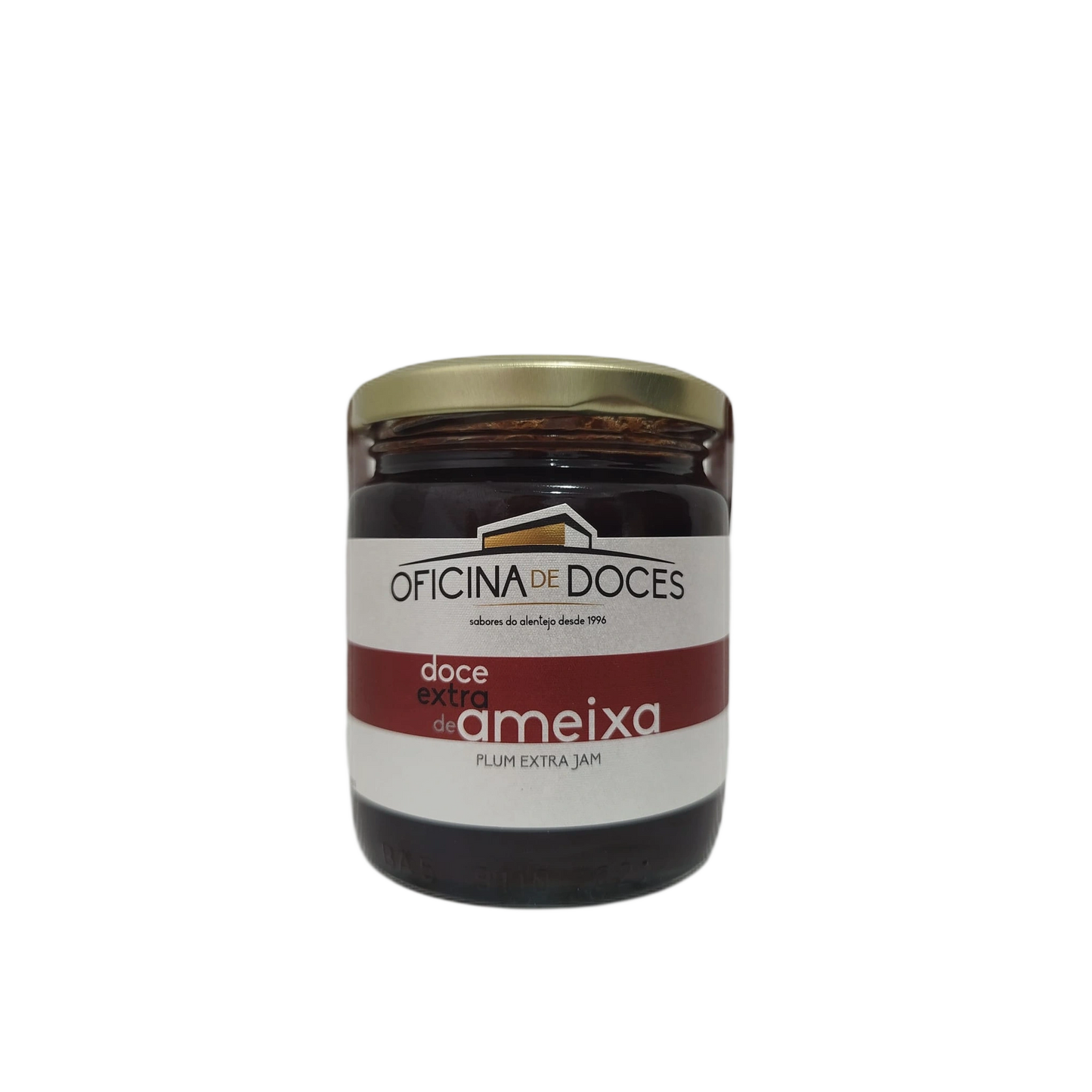
Try a small glass of Cartuxa Colheita Tardia 2018 – DOC Alentejo–Évora, served chilled. If you enjoy the contrast with fruit, a small spoonful of Extra Plum Jam alongside each portion is our serving suggestion, not an ingredient in the collected recipe.
Storage
Once cooled, cover the dish and refrigerate for up to 2 days. Serve chilled or leave it briefly at room temperature before serving; do not leave it out of the refrigerator for hours.
More Alentejo sweets
If you prefer another spoon dessert, discover our Mértola-style barriga de freira.
Source
Alentejo Gastronomic Guide (2013), p. 629, “Cericá”, Vila Viçosa. Interview with Maria Rocha, by Filipa Nobre, in 2012.
Recipe collected in the Alentejo, adapted by Herdade do Estacal for the “À Mesa com o Alentejo” blog. We retained the 9 eggs, 1 l of milk, the custard thickened over the heat, the whipped egg whites, the spooned arrangement in earthenware, the cinnamon and the cut made halfway through baking. We reduced the sugar from 500 g to 350 g; we interpreted the 9 tablespoons of flour as 90 g, replaced the margarine in the source with butter, and specified the temperature, times and baking indicators. The plum jam is merely an optional serving suggestion.
Illustrative image generated for this article.