Share
Drunken Pears from Mértola
The pears slowly cook in red wine and sugar, taking on a ruby colour and a tender texture without losing their shape. At the end, the syrup is reduced until it coats the fruit. Served warm or chilled, the dessert lets the wine and the flavour of the pear take centre stage.
This recipe was collected in Amendoeira da Serra, in the municipality of Mértola, during an interview with Ana Maria Oriete Henriques in 2012. The Alentejo Gastronomic Guide lists it as a year-round recipe, especially during pear season.
Serves: 4 people, one pear per person.
Preparation: about 15 minutes.
Cooking and syrup: about 35–55 minutes.
Estimated total time: 50 minutes to 1 hour and 10 minutes, plus cooling time if serving chilled.
Ingredients for 4 people
- 4 medium pears, about 150–180 g each, ripe but firm and similar in size
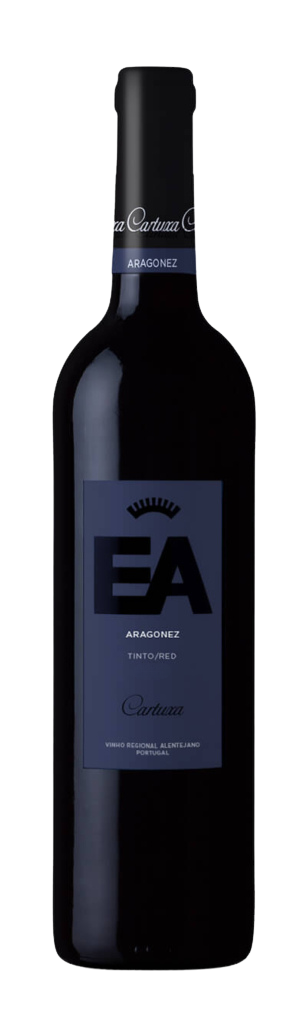
- 250 ml of EA Aragonez Red 2024, plus up to about 100 ml to add during cooking, only if needed
- 100 g white sugar
Step-by-step method
-
Prepare the pears.
Wash the pears and peel them with a small knife or vegetable peeler, leaving the stems on. Trim a thin slice from the base only if you need them to stand upright for serving. Do not core them at this stage: they will be cored at the table as you eat. Choose firm fruit with no spoiled areas so it holds up during cooking. -
Add the wine, sugar and fruit.
Use a saucepan about 18 cm in diameter, so the four pears fit close together in a single layer without being crowded. Pour in the 250 ml of red wine and the sugar, stir and arrange the pears on their sides. The liquid does not need to cover them completely. Bring to a gentle simmer over medium heat. -
Cook over low heat.
Reduce the heat, partially cover and simmer for about 30–45 minutes. Carefully turn the pears every 8–10 minutes using two spoons so you don't mark them, and baste the exposed side with the syrup. Start checking after 25 minutes: a thin knife should slide into the widest part with little resistance, without the fruit falling apart. If the bottom of the pan starts to get nearly dry before the pears are tender, add a little of the reserved wine, about 30 ml at a time, and return to a simmer. Remove each pear as soon as it is ready, even if the others need more time. -
Reduce the syrup and serve.
Transfer the pears to a serving dish. Let the syrup simmer uncovered over medium-low heat for about 5–10 minutes, until slightly thickened and it lightly coats the back of a spoon. If it has already reached this stage, there is no need to reduce it further. Don't let it caramelize: it will thicken slightly as it cools. Pour the syrup over the pears and serve warm, or let them cool and refrigerate to serve chilled. Remove the stems and cores at the table.
The perfect balance of fruit and syrup
Choose pears at a similar stage of ripeness: a very ripe one may fall apart before a firmer one is cooked through. Avoid a vigorous boil, and don’t cook the fruit for longer to thicken the syrup; remove the pears first and reduce the liquid separately.
Wine pairing
Serve a small measure of Vasquinho Licoroso Tinto alongside. Its sweet, concentrated profile, with notes of red fruit, fig and sour cherry described in the product information, pairs well with the fruit and wine syrup. For cooking, use the EA Aragonez Tinto listed in the ingredients; save the fortified wine for the glass.
Preparing ahead and storage
You can prepare the pears the day before. Once they have cooled, store them with the syrup in a covered container in the refrigerator, and don’t leave them at room temperature for long periods. To serve them warm, heat only the amount needed with a little of their own syrup over low heat, without bringing it back to the boil for an extended period.
Frequently asked questions
Do the pears have to be covered with wine?
Not in this adaptation. In a small pan, the liquid sits below the tops of the fruit; turning and basting the pears during cooking helps distribute it. If the bottom is drying out, add a little wine, as indicated in the source.
The syrup is runny, but the pears are already cooked. What should I do?
Remove the pears and reduce only the syrup, with the pan uncovered. Stop when it starts to lightly coat the spoon; don’t wait until it becomes very thick while still hot.
One pear is soft, but the others are still firm. Should I wait for them all?
No. Remove the pear that is already cooked and continue cooking the others, checking them with the tip of a knife. The time depends on their size, variety and ripeness.
Can I consider this dessert alcohol-free?
No. The recipe is made with wine, and cooking cannot guarantee that all the alcohol is eliminated.
More Alentejo sweets
For a dessert made with eggs, honey and olive oil, also discover the Montargil Honey Pudding, made without caramel.
Source and adaptations
The Drunken Pears recipe was collected in Amendoeira da Serra, Mértola, in an interview with Ana Maria Oriete Henriques by Ana Rita (ADPM) in 2012. Published in Carta Gastronómica do Alentejo (2013), page 827, and adapted by Herdade do Estacal for the blog «À Mesa com o Alentejo».
The source indicates a glass of red wine, half a glass of sugar and the desired number of pears, cooked together, with more wine if needed. In this adaptation, the quantities are set at four pears, 250 ml of wine and 100 g of sugar; these measurements are not proven equivalents of the interviewee’s glass. Peeling the fruit, leaving the stalks on, using a pan about 18 cm wide, turning and basting the pears, setting cooking times and reducing the syrup separately are recommendations for this version. The timings are estimates and have not been kitchen-tested.
Illustrative image generated.