Share
Tramaga Sweet Potato Biscuits: An Alentejo Oven-Baked Recipe
These Tramaga sweet potato broas are baked as small, hand-shaped cakes. The cooked sweet potato gives them a soft crumb; cinnamon, fennel, a little honey and olive oil complete the dough. They are an oven-baked alternative to the fried sweets in this series.
A Tramaga collection
Carta Gastronómica do Alentejo records this recipe in Tramaga, in the municipality of Ponte de Sor, in an interview with Ana Ratinho. The collection places the broas in festive periods without limiting them to Christmas. This version reduces the source's large quantities for a home batch and identifies the measurements and timings added.
Estimated yield: about 36 to 40 small broas
Approximate total time: 2 hours, plus cooling, with two trays baked successively
Ingredients for about 36 to 40 broas
- 500 g cooked sweet potato, well drained and mashed (weigh after cooking)
- 500 g self-raising flour
- 250 g sugar
- 30 g rosemary honey
- 100 ml olive oil, plus up to 5 ml for greasing the trays if not using baking paper
- 7 g ground cinnamon
- 5 g ground fennel
- 1 egg yolk, beaten with 5 ml water, for brushing
Preparation
- Cook the sweet potato. Peel and cut enough sweet potato to obtain 500 g after cooking. Cook in boiling water for about 15 to 20 minutes, until a fork goes in without resistance. Drain very well, mash and leave to cool until just warm. Weigh 500 g of purée; do not use the cooking water.
- Prepare the oven. Heat to 180 °C, without fan assistance. Line two trays with baking paper or lightly grease them with up to 5 ml of olive oil in total.
- Make the dough. Mix the 500 g self-raising flour with 250 g sugar, 7 g cinnamon and 5 g fennel. Add 500 g purée, 30 g honey and 100 ml olive oil. Knead only until uniform and shapeable. If it is sticky, leave it to rest for 10 minutes and shape it with lightly greased hands; if it is still impossible to shape, sprinkle in a small amount of flour without incorporating it all at once.
- Shape and brush. Divide into portions of about 35 g and form small ovals. Arrange them on the trays, leaving about 3 cm between broas. Beat the egg yolk with the 5 ml water and brush lightly. The egg yolk is mentioned in the source's preparation, although it does not appear in its ingredient list.
- Bake in two batches. Bake one tray at a time on the middle shelf, for about 18 to 24 minutes per batch. The broas should be golden around the edges, firm on the surface and free of raw dough when one is opened for testing. Leave them on the tray for 10 minutes before transferring them to a wire rack. If using two trays at the same time, switch their positions halfway through and check that both are done.
Tips for an even batch
Weigh the purée after draining it: 500 g raw sweet potato does not necessarily equal 500 g purée. Make similarly sized portions so they bake evenly. The moisture of the sweet potato and the oven can affect the texture and baking time; the stated yield is an estimate, not a guarantee.
To serve with
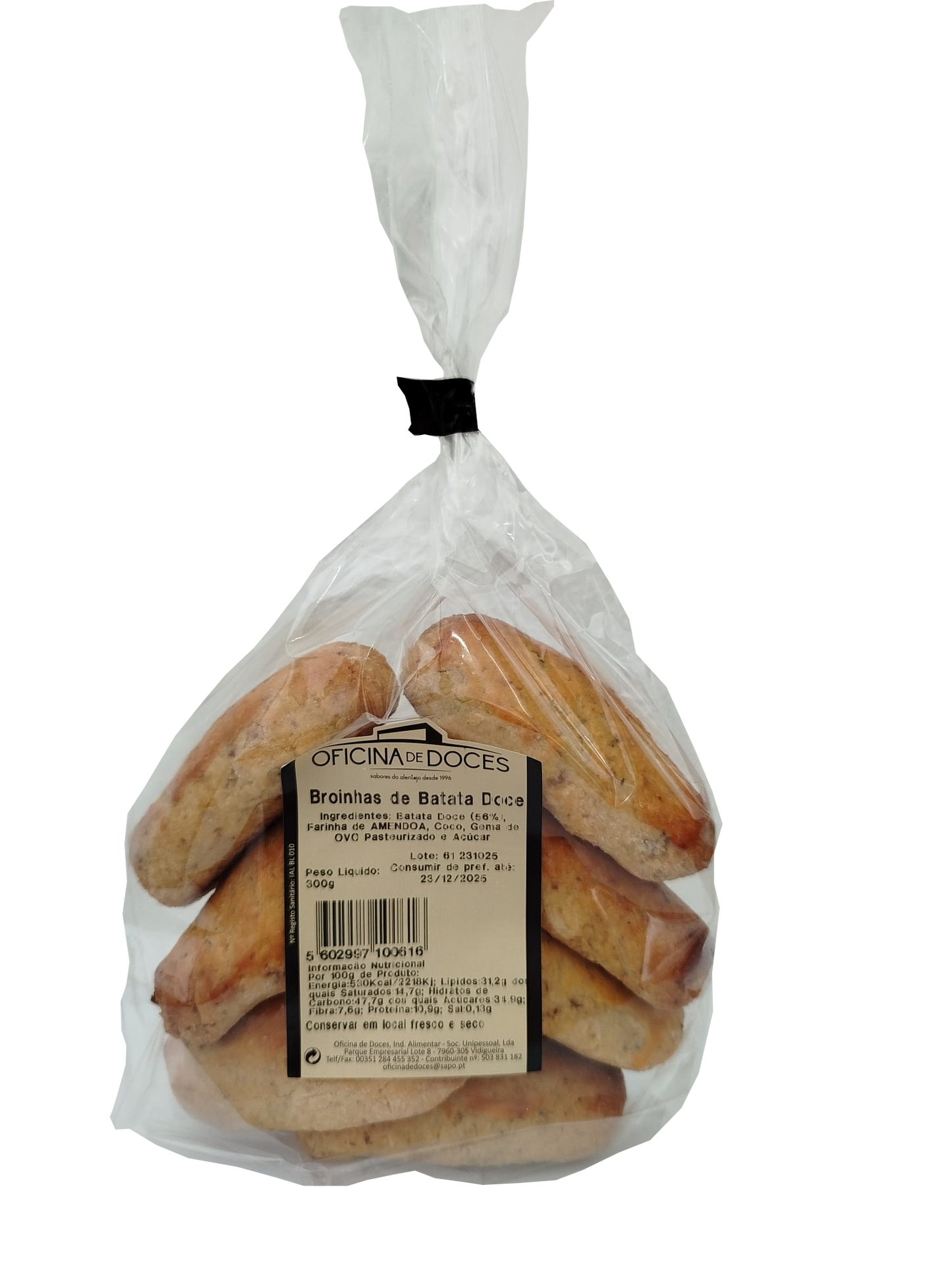
Vinho Vidigueira Licoroso Branco DOC, served in a small measure, is a suggestion to accompany the cinnamon and sweet potato. If you prefer ready-made broas, the shop has Sweet Potato Broinhas; they are a related product, not the collected recipe or an ingredient in this dough.
Storage
Once cool, store the broas in a sealed container in a cool place for up to 3 days. You can also freeze them separated by baking paper and thaw them at room temperature.
More sweets from the series
For a filled and fried pastry, discover our Brotas chickpea azevias.
Source
Carta Gastronómica do Alentejo (2013), p. 405, “Broas de Batata-doce”, Tramaga, Ponte de Sor. Interview with Ana Ratinho, by Teresa Simão, in 2012.
Recipe collected in the Alentejo, adapted by Herdade do Estacal for the “À Mesa com o Alentejo” blog. We halved the main quantities: 1 kg self-raising flour and 1 kg purée became 500 g of each, 500 g sugar became 250 g and 2 dl olive oil became 100 ml. The source's 3 tablespoons of honey, cinnamon and fennel were converted into approximate weights for this half recipe. We quantified the egg yolk mentioned only in the preparation and added the size of the broas, temperature, baking time and signs of doneness. Yield and time are practical estimates, not the results of a kitchen test.
Illustrative image generated for this article.