Share
Rolled Filhoses from Alter do Chão
Some sweets call for time and a patient hand. The coiled filhoses from Alter do Chão are one of them: thin strips of dough that turn into spirals during frying before receiving a coating of sugar syrup. The charm lies in the loose coils, which allow the dough to fry on the inside and outside.
A collection linked to Christmas
The Alentejo Gastronomic Charter records this recipe in Alter do Chão, based on an interview with Maria José Pires Barreiros da Silva. The collection associates filhoses with Christmas and All Saints’ Day. They have no filling: they are distinguished by the rolled-out dough, which is coiled during frying in olive oil, and by the final dip in a water-and-sugar syrup.
Estimated yield: 30 to 40 filhoses, depending on their size and thickness
Approximate time: 2 to 3 hours, including resting and frying one piece at a time
Ingredients
For the dough
- 500 g self-raising wheat flour, plus a little more for rolling out
- 2 medium eggs
- 62 g lard
- 62 g margarine
- 25 ml strained orange juice
- 15 ml brandy
- 15 ml olive oil
- Up to 30 ml water, only if necessary to bring the dough together
For frying
- Enough olive oil to reach a height of 3 to 4 cm in a tall saucepan 20 to 22 cm in diameter, approximately 1 to 1.5 litres
For the syrup
- 300 g sugar
- 150 ml water
Have a rolling pin, a pastry cutter, a tall, stable saucepan, a long-handled metal fork, long tongs and a slotted spoon at hand. A kitchen thermometer helps control the frying. Do not use plastic utensils or bring your hands close to the hot olive oil.
Step-by-step preparation
-
Prepare and bring the dough together.
Melt the lard and margarine over low heat and leave to cool slightly. Put the flour in a large bowl, make a well and add the eggs, lukewarm fats, orange juice, brandy and the 15 ml of olive oil. Mix first with a spoon and then with your hands. If there is dry flour that does not incorporate, add water, one teaspoon at a time, using only as much as necessary. You should obtain a cohesive, pliable, non-sticky dough. -
Knead and leave to rest.
Knead for about 5 to 8 minutes, until the dough becomes smoother and you can fold it without it falling apart. Cover and leave to rest for 20 minutes at room temperature. This rest makes rolling out easier; it is not intended to be a rise with baker’s yeast. -
Roll out and cut the strips.
Work with small portions at a time and keep the remaining dough covered. Roll it out on a lightly floured work surface to about 2 mm thick. Cut into strips approximately 4 cm wide and 20 to 25 cm long. Shake off the excess flour. The dimensions are only a guide: start with a shorter strip to practise. -
Heat the olive oil safely.
Use a tall, stable saucepan, filling it no more than one third full. Heat the olive oil over medium heat, ideally between 165 and 175 °C, without letting it smoke. Test with a small piece of dough: it should bubble and brown gradually, not darken immediately. Keep the utensils dry and the work area clear. -
Roll during frying.
Secure the end of a strip in the tines of a long-handled fork and hold the other end with the tongs. Dip only the first end into the oil. Slowly turn the fork while lowering the rest of the strip with the tongs, forming a wide spiral. Leave small gaps between the turns: do not compress the dough or let the layers stick together. At the end, touch only the outer end to close the piece. Work with one fritter at a time and keep your hands away from the saucepan; if you cannot control the strip safely, stop and practise the movement first with the utensils and cold dough. -
Brown and drain.
When the spiral is firm, loosen it from the fork with the help of the tongs. Turn it carefully and let it brown on both sides, for about 2 to 3 minutes in total, adjusting according to the size and temperature. Remove with a slotted spoon and leave to drain on absorbent paper. Cut open the first piece after it has cooled slightly: the inside should be cooked, with no wet or raw dough. If the outside darkens before the inside is cooked, lower the heat slightly and make the following strips thinner. -
Make a light syrup.
After frying, put the water and sugar in a clean saucepan. Heat, stirring until the sugar dissolves. When it boils, let it simmer gently for about 2 to 3 minutes without continuing to stir. For this adaptation, the syrup should remain fluid enough to lightly coat the fritters, not become caramel or a thick glaze. Remove from the heat before it starts to colour. -
Dip in the syrup and serve.
Using tongs, quickly dip each fritter in the warm syrup, let the excess drip off and place it on a rack over a tray. Do not leave them soaking, to preserve their texture. If the syrup thickens too much, add a tablespoon of hot water and heat gently. Leave to cool before serving.
The secret lies in loose turns
Rolling is the most demanding part. The source insists that the filhoses should not stick together, joining only at the tip. So, make an open spiral and work without rushing. Thin dough, a stable temperature and space between the turns help prevent an overly dark exterior with a raw centre.
Wine and olive oil
Try a small glass of Vidigueira Licoroso Branco DOC, served chilled. Its sweet, velvety profile, with notes of ripe tropical fruit, complements this Alentejo sweet-treat proposal.
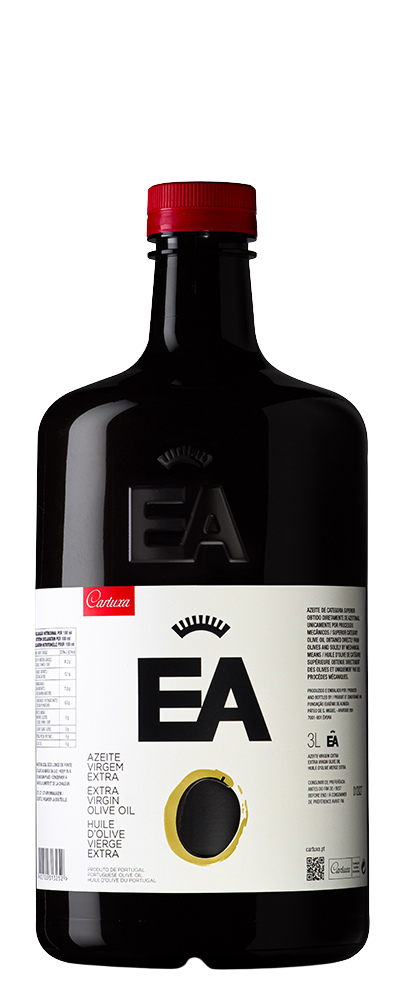
To prepare the recipe, EA Extra Virgin Olive Oil 3 L is an option for the dough and for frying. The amount used in the pan depends on its size and is not all absorbed by the filhoses.
Advance preparation
Prepare the filhoses on the same day to preserve their texture as well as possible. Let them cool and drain off the syrup before placing them on the serving dish; do not stack them while the coating is still moist. If any are left over, store them in a sealed container in a cool, dry place and eat them the next day for the best texture. The syrup tends to soften the dough over time.
More Alentejo sweets
To discover another recipe from the region, explore our Barriga de Freira à Moda do Alentejo, de Mértola.
Source and adaptations
Carta Gastronómica do Alentejo (2013), p. 95, “Filhoses de Enrolar”, Alter do Chão. Interview with Maria José Pires Barreiros da Silva by Teresa Simão, Leader-Sor, in 2012.
Recipe collected in the Alentejo, adapted by Herdade do Estacal for the “À Mesa com o Alentejo” blog. We reduced the base to 500 g of flour and rounded the fats to 62 g each. We kept the eggs, lard, margarine, self-raising flour, frying in olive oil and rolling during frying. We set guideline amounts for aguardente, orange juice and olive oil, without an exact conversion of the measurements from the original collection, and used the dough olive oil without preheating it first. The optional water, resting time, strip dimensions, temperature, timings and syrup proportions are guidelines from this adaptation. The pairing is our suggestion.
Illustrative image generated for this article.