Hare à la D. Carlos of Vila Viçosa
The hare is roasted with white wine and lard; the sauce is prepared separately with bacon, red wine, liver and a small glass of fortified wine. Once strained, it coats the meat with a smooth texture and intense flavour, balanced by the acidity of the vinegar.
This version of Hare à Rei D. Carlos was recorded in São Bartolomeu, Vila Viçosa, in the Alentejo Gastronomic Guide. The entry refers to an interview with relatives of Joaquim Espiga and the archives of the Alentejo Gastronomic Brotherhood, in 2012.
Estimated yield: 4 people.
Preparation: about 30 minutes.
Cooking and finishing: about 1 hour 15 minutes to 1 hour 45 minutes, preparing the sauce while the hare roasts.
Estimated total time: 1 hour 45 minutes to 2 hours 15 minutes; a tougher hare may need longer.
Ingredients for 4 people
- 1 cleaned hare, about 1.2–1.5 kg bone-in, jointed into eight pieces, plus the cleaned head and liver, reserved for the sauce
- 250 ml dry white wine
- 250 ml red wine
- 50 ml fortified wine
- 40 g lard
- 100 g bacon, cut into strips
- 1 medium onion, about 150 g, chopped
- 2 garlic cloves, minced
- 30 ml olive oil, half for the sauté and half for the liver
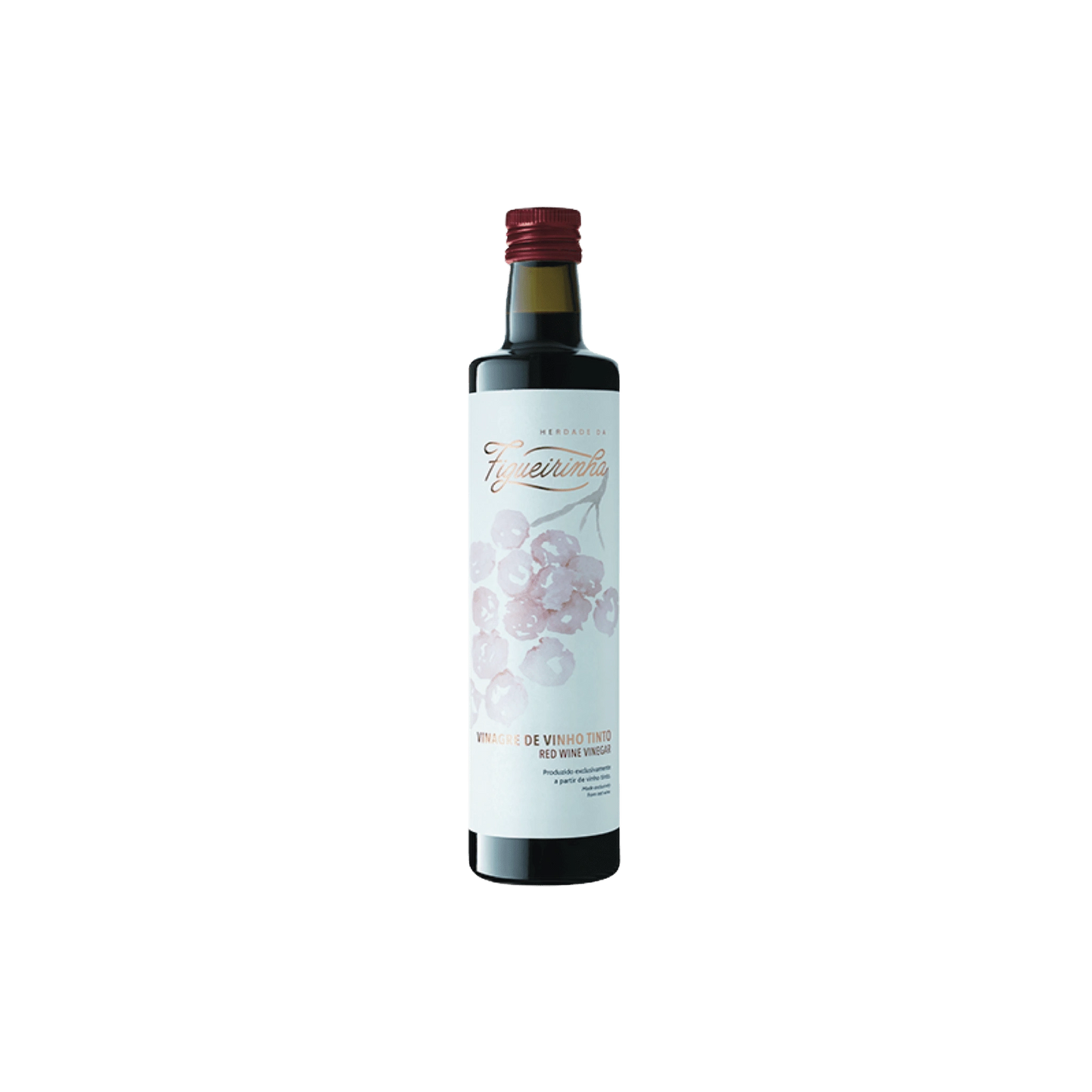
- 15 ml Figueirinha — Red Wine Vinegar
- 6 black peppercorns, lightly crushed
- Salt and ground black pepper, to taste
- About 400 ml hot water: 200 ml to start cooking the sauce, and the rest to adjust the sauce or roasting-tin liquid if needed
Step-by-step preparation
-
Prepare the hare and preheat the oven.
Ask the butcher to properly clean the hare, joint it and set aside the liver. The head should be cleaned and quartered by the butcher, with no loose bone fragments. If the meat is frozen, thaw it in the fridge beforehand. Preheat the oven to 180 °C, without the fan. Arrange the eight pieces in a roasting tin in a single layer, season with salt and ground pepper, pour over the 250 ml of white wine and dot with the lard. Keep the head and liver in the fridge until needed. -
Roast the meat without letting it dry out.
Cover the roasting tray with foil and place it in the oven. Allow about 60–90 minutes in total, checking after 45 minutes. Baste the meat with the liquid in the bottom of the tray and, if it is nearly dry, add a little of the reserved hot water, about 50 ml at a time. Uncover towards the end to brown, keeping the bottom moist. The smaller pieces may be ready before the legs: remove them individually and keep them covered. In this adaptation, the hare is served completely cooked, not pink; check that the centre of the thickest part, without touching the bone, reaches 70 °C for 2 minutes. The meat should also be tender; if it is still resistant, continue cooking, covered and with liquid in the bottom of the tray, checking every 15 minutes. -
Prepare the sauce base while the hare roasts.
Heat 15 ml of olive oil in a small pan. Sauté the onion over medium-low heat for about 5 minutes, add the garlic and bacon, and cook for a further 3–4 minutes. Add the prepared head and peppercorns; brown slightly, turning carefully. Add the vinegar and 250 ml of red wine, simmer gently for 5 minutes, then add 200 ml of hot water. Partially cover and simmer gently for about 60–90 minutes, until the meat on the head is completely cooked and comes away from the bones. Stir occasionally and add a little of the reserved water if the liquid reduces too much. The bottom of the pan should retain sauce, not fry dry. -
Cook the liver and stir it into the sauce.
When the base is nearly ready, cut the liver into pieces about 1 cm across. Heat the remaining 15 ml of olive oil in a small frying pan and cook over medium heat, turning, for about 5–8 minutes, until completely cooked through. Also check that the centre of the thickest pieces reaches 70 °C for 2 minutes; the time given is only an estimate. Mash the cooked liver with a fork and add it to the pan with the 50 ml of reserved wine. Simmer gently for a further 5 minutes, stirring. -
Strain the sauce and serve.
Remove the pieces from the head and let them cool just enough to handle. Carefully separate the meat from the bones, discarding every bone and fragment; do not blend them. Return only the clean meat to the sauce, blend, and strain everything through a fine-mesh sieve into a clean saucepan, pressing with a spoon. Bring back to a simmer and taste to adjust the salt. If it’s too thick, add a little hot water; if it’s too thin, simmer gently for a few minutes to reduce, stirring. Arrange the roasted hare on a warmed serving platter, pour over the hot sauce and serve immediately, warning diners that the pieces of hare still contain bones.
How to get the meat and sauce right
The age and size of the hare make a big difference to the cooking time. Protect the loin, which may be ready before the legs, and don’t confuse cooked meat with tender meat: you may need to continue roasting with the roasting tin covered. A fine-mesh sieve catches fibres and small residues in the sauce; removing the bones before blending is essential.
To serve alongside, we suggest roasted potato wedges, served separately, as shown in the photograph.
Wine pairing
Serve with Vidigueira Reserva Red DOC. Its full-bodied profile, with ripe black fruit and a hint of balsamic, complements the game and the rich sauce. Save this wine for the table; the white, red and fortified wines on the list are used in the preparation.
Preparing ahead and storage
Prepare the ingredients before turning on the oven, and keep the liver in the fridge until you’re ready to cook it. If you make the dish ahead of time, cool the meat and sauce quickly in shallow containers and store them covered in the fridge. Reheat only the amount you’re going to serve, with the meat covered so it doesn’t dry out, until piping hot in the centre; heat the sauce separately and pour it over the hare just before serving.
Frequently asked questions
The loin is ready, but the legs are still tough. What should I do?
Remove the pieces that are fully cooked and keep them covered. Continue roasting the legs with liquid in the bottom of the covered roasting tin, checking the texture every 15 minutes. Don’t leave the loin in the oven just to wait for the other pieces.
Can I blend the whole head to make the sauce?
No. After cooking, carefully remove the bones and return only the clean meat to the sauce. Only then blend and pass through a fine-mesh sieve. The sieve is no substitute for deboning.
The sauce became too thick after adding the liver. How can I adjust it?
Add hot water a little at a time, one tablespoon at a time, stirring over low heat until the sauce becomes fluid again and coats the meat. Check the seasoning only after adjusting the consistency.
Does this version serve the hare pink, as the source indicates?
No. In this adaptation, both the hare and the liver are cooked thoroughly. The thermometer check and the combination of temperature and time are given in the steps; colour alone does not confirm that they are cooked.
More game recipes
For another oven-baked dish, discover Wood-Fired Oven-Roasted Wild Boar, with roast potatoes on the side.
Source and adaptations
Recipe “Hare à King D. Carlos”, collected in São Bartolomeu, Vila Viçosa, in the Alentejo Gastronomic Guide (2013), page 630. The entry identifies an interview with Joaquim Espiga’s relatives, conducted by Francisco Sabino, and the archive of the Alentejo Gastronomic Brotherhood, in 2012. Adapted by Herdade do Estacal for the blog “At the Table with the Alentejo”.
The source calls for roasting the hare for 30 minutes, keeping the meat pink, and frying the liver in olive oil for 3 minutes. This version extends the cooking time for both and checks the centre with a thermometer. The head and liver are kept in the strained sauce; quantities have been added for ingredients that were not measured, along with water to control reduction, protection for the roasting tin, and deboning instructions. Cooking times and yield are estimates.
The full cooking guidance and the recommendation of 70 °C for 2 minutes were consulted at the Food Standards Agency.
Illustrative photograph